
Hustlers, The Money Tossers, and The Dancers

“Hustlers” 2019. © STX Films
Work can feel like a scam sometimes. Some jobs or careers are predicated on a person’s ability, proximity/access to wealth, and physique. In Lorene Scafaria’s Hustlers, roles in corporate, retail, hospitality, and sex work are the primary industries for the various characters.
Interestingly, a strong argument can be made to describe sex work as hospitality work. According to Indeed, the hospitality industry features “services that support people traveling or visiting certain places for pleasure.” Is the business of pleasure not what underpins sex work? Yet one industry doesn’t face the same moral outrage as the other.
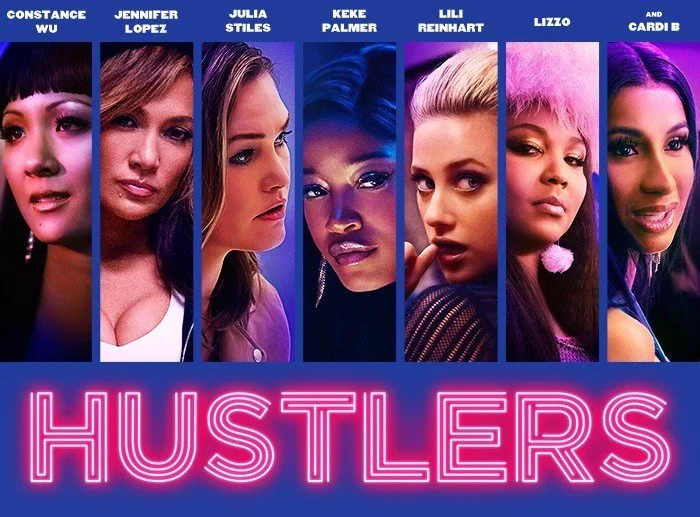
“Hustlers” debuted in 2019. Still relevant today, this blockbuster explores the lives of exotic dancers and the sex industry at large. Boasting a star-studded cast, Lorene Scafaria’s film was centered around the 2015 New York magazine article, “The Hustlers at Scores”. Keo and Samantha Foxx (born Samantha Barbash) are real women who became fast friends, akin to sisters. They later hatched a plan to defraud Wall Street men of their wealth after the global recession of 2008.
Somehow, the world has dignified corporate workers as “stand-up people” and demeaned sex workers as criminals. Yet when Wall Street crashed, corporate employees who squandered the savings of thousands of people and precipitated a global economic crisis did not face the same vitriol as the exotic dancers who entertained them behind closed doors.
“We gotta start thinking like these Wall Street guys,” Ramona, played by J-Lo, says to her co-star, Constance Wu’s character Destiny. “You see what they did to this country? They stole from everybody! Hard-working people lost everything. And not one of these douchebags went to jail. Not one! Is that fair?”
Work is not inherently fair, but it is a part of life. When an employee dons a suit, sells their time and skills, then checks their personal life at expensive doorways of corporate buildings, we don’t consider what Wall Street business people are doing as criminal, or even having the potential to be criminal.

Keke Palmer as Mercedes © STX Films
Yet when a woman, like those in "Hustlers,” dons her costume, sells her time and skills, then checks their personal life at the door of a strip club, a place of business, society assumes inherent criminality is taking place.
Where corporate workers go the extra mile for a client, in the form of gifts, long phone calls, and procuring exotic dances, or drinks in a nightclub, we call them dedicated. If said clients are happy and offer a bonus to their corporate service provider, this is perceived as being above board.

So why is it frowned upon when exotic dancers go the extra mile for their clients, by styling themselves enticingly, flirting, and praising, and receive gifts for services rendered, they are accused of prostituting themselves?
In corporate businesses, the HR department manages and oversees employees. Similarly, in strip clubs, House Moms are responsible for getting dancers to the stage on time, stocking the change rooms, and more.
Finally, just like corporate employees, dancers have to be on their A-game as soon as the doors of their club open. If we accept the definition of work as “activity involving mental or physical effort done to achieve a purpose or result,” it’s fair to say that sex workers and corporate employees are two sides of a $100 bill.

This isn’t to say that “Hustlers” depicts ethical sex work. The film identifies the subcultures of the sex industry, where abuse creates unhealthy and unsafe workspaces. With little security, no fallback plan, and no protection, sex workers are often left with little to no options about the type of sexual acts they perform.
For example, one client extorted Destiny for fellatio, a blow job, knowing she was desperate to make ends meet. What inspired this man’s impunity? He knew there would be no recourse or accessible justice for Destiny.
And why was the cost of dancing exceeding the profits? What people don’t realize is that dancers have to pay a fee to the club, the DJ, and the doorman to dance at a particular club. This resembles professionals who pay dues to regulatory bodies to maintain their licenses.
In conclusion, sex work and corporate work aren’t too far off. In the words of Ramona, where any kind of work is concerned, “You’ve got people tossin’ the money. You’ve got people doin’ the dance.”
